
























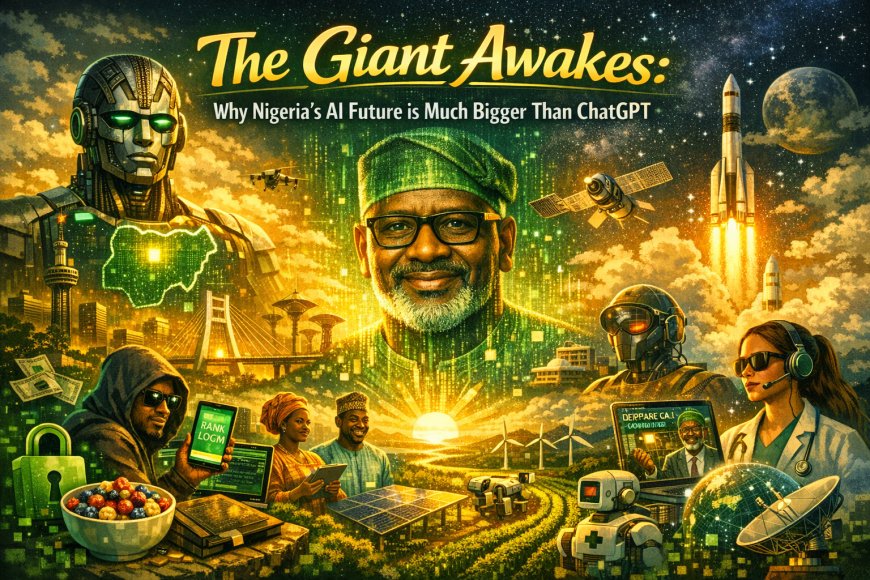
The Giant Awakes: Why Nigeria’s AI Future is Much Bigger Than ChatGPT
The Giant Awakes: Why Nigeria’s AI Future is Much Bigger Than ChatGPT
The streets of Yaba, Lagos, hum with a familiar electricity. It’s the sound of a generation that refused to be left behind by the digital revolution. From fintech to the creative economy, Nigeria has proven time and again that we don’t just adopt technology—we master it, localize it, and scale it.
But today, a new wave is crashing against our shores: Artificial Intelligence.
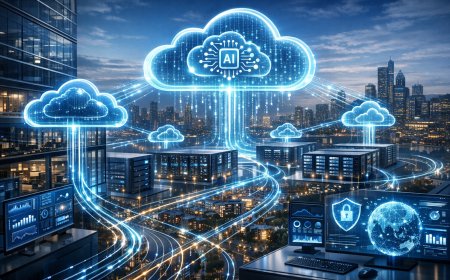
If you walk into any co-working space from Lekki to Abuja, the conversation is dominated by ChatGPT. We are using it to write emails, generate code, and summarize reports. It is a powerful tool, a gateway drug to the world of automation. But if we stop there, we risk missing the greatest economic windfall in our nation’s history.
Nigeria is standing on the edge of a "Hidden AI" goldmine. Beyond the chat interface lies a world of specialized technology that doesn't just answer questions—it solves systemic African problems.
The Mirage of the Chatbot
Generative AI, like ChatGPT, is the "glamour" side of technology. It’s visible and easy to use. However, the true power of AI for a developing giant like Nigeria lies in **Predictive and Analytical AI.**
While the world is distracted by bots that write poetry, the real revolution is happening in the silent algorithms that can predict rainfall patterns for a farmer in Benue, or the computer vision systems that can diagnose malaria in a rural clinic without a resident doctor.
The Opportunities We Aren’t Seeing (Yet)
1. Precision Agriculture: Feeding a Nation
Nigeria’s agricultural sector is ripe for an AI overhaul. We don’t just need bots to talk to; we need AI-powered drones and sensors that analyze soil health and detect pests before they destroy a harvest. By leveraging AI in "Agri-Tech," we can move from subsistence farming to becoming the breadbasket of the continent.
2. The Language Frontier
The internet speaks English, but Nigeria speaks in a beautiful tapestry of over 500 languages. There is a massive opportunity in building **Localized Large Language Models (LLMs).** Imagine an AI that understands the nuances of Yoruba, Hausa, or Igbo—facilitating trade, legal services, and education for millions who are currently digitally excluded.
3. Infrastructure and Logistics
Lagos traffic isn't just a nuisance; it’s an economic drain. AI-driven traffic management and logistics optimization could save the Nigerian economy billions of Naira in lost man-hours. Predictive AI can help our logistics startups move goods from Apapa port to the hinterlands with surgical precision.
4. Healthcare at the Edge
We have a deficit of medical professionals. AI can act as a force multiplier. "Edge AI"—AI that runs on simple smartphones without needing high-speed internet—can empower community health workers to interpret X-rays or monitor maternal health, saving lives in real-time.
From Consumers to Architects
The danger of the current "ChatGPT craze" is that it positions Nigerians as mere consumers of foreign intellectual property. We are feeding data into systems built in Silicon Valley, optimized for Western contexts.
To seize the hidden opportunities, we must move from being **users** to being **architects.**
We have the raw materials: the most vibrant youth population on earth, a culture of relentless innovation, and problems that demand urgent solutions. In the world of AI, "problems" are actually data points. And Nigeria has no shortage of data points.
A Call to the Visionaries
To the Nigerian developer, the entrepreneur, and the policymaker: Look past the chat box.
Don't just build a wrapper around an American API. Build a model that understands the Nigerian supply chain. Build a system that optimizes our power grid. Build the AI that speaks our mother tongues.
The "Hidden AI" opportunities are the ones that won't make it into a viral TikTok trend, but they are the ones that will build our infrastructure, grow our GDP, and lift millions out of poverty.
Nigeria didn't just join the fintech race; we led it in Africa. We didn't just watch the Afrobeats movement; we owned the global stage. Now, the AI frontier is calling. It’s time to move beyond the chatbot and build the future our nation deserves.
The giant is awake. It’s time to code the future.
What's Your Reaction?
 Like
0
Like
0
 Dislike
0
Dislike
0
 Love
0
Love
0
 Funny
0
Funny
0
 Angry
0
Angry
0
 Sad
0
Sad
0
 Wow
0
Wow
0